Cash-in-Transit & high-value cargo
Cash-in-Transit, jewellery distribution, high-value electronics, and pharma loads share one operational truth: they are theft magnets, and every tracker on board needs to assume an adversary is actively trying to defeat it. The Teltonika range includes jamming detection, dead reckoning (track survives in tunnels and underground), unplug detection, towing detection, and panic-input wiring. We spec these features specifically for high-risk freight — and pair with armed-response or recovery networks where the operator doesn't already have one.
Why high-value cargo trackers are a different class
A standard fleet tracker assumes a benign operating environment. A CIT tracker assumes an active adversary with a GPS jammer in the boot of a chase car. The threat model is completely different.
Modern hijack and CIT-heist tactics in SA include: GPS signal jamming (jammers freely available online), forced stops in tunnels and underground parking to escape signal, towing of disabled vehicles to off-grid locations, and team-coordinated attacks where the response window matters in seconds rather than minutes.
Teltonika's FT platform devices (FTC927 in particular) include dead-reckoning — when GPS signal is lost (jamming, tunnel, underground), the device estimates position from accelerometer + gyroscope and keeps the track alive. Combined with jamming-detect alarms, unplug alarms, and a hardwired panic input, this is the hardware class CIT and high-value transport requires.
Capabilities to look for
Jamming detection
Built-in cellular jamming sensor — the moment GPS or GSM signal is suspiciously blocked, the tracker triggers a silent alert before the position is lost.
Dead-reckoning position survival
FTC927 with accelerometer + gyroscope fusion estimates position when GPS is unavailable (tunnels, underground garages, signal jammers). The track survives the very environments thieves use to disappear.
Unplug + tow detection
Removal of power triggers an alarm. Movement-without-ignition (being towed) triggers an alarm. Standard on most FMC / FTC units.
Panic button input
Hardwired panic-button input triggers an immediate alarm to control room — no app, no tap, no fumble.
Hidden / secondary tracker support
Pair the primary tracker with a hidden battery-powered TAT140 — when the primary is found and disabled, the secondary keeps reporting.
Devices for cash-in-transit & high-value cargo
Each device links to its full spec page. Add to your list and we'll come back with pricing.
The dead-reckoning flagship. Track survives in tunnels, underground garages, and GPS-jamming events. The default for CIT and high-value freight.
Hidden secondary battery-powered Cat-1 tracker. When the primary is found and disabled, this one keeps reporting from somewhere inside the cargo.
Premium primary tracker for vehicles where dead reckoning isn't required but advanced panic / camera I/O is.
How the data flows
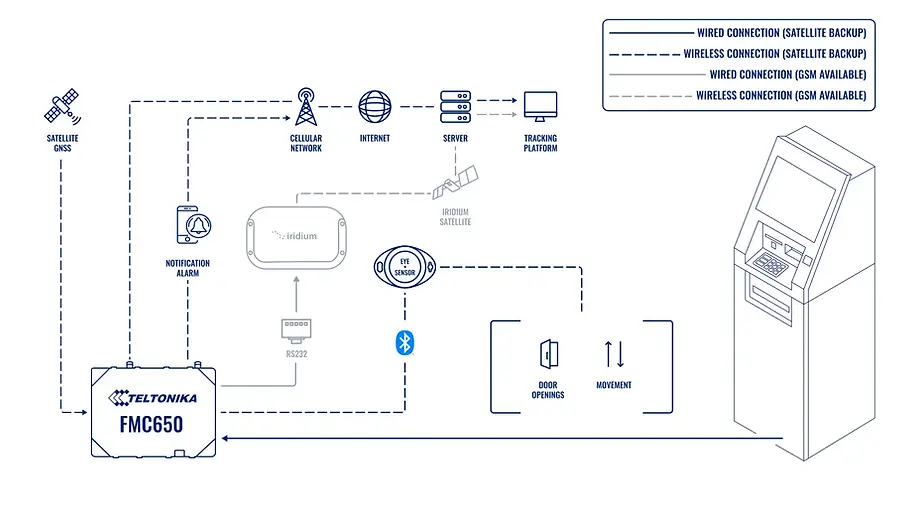
Primary tracker with dead-reckoning keeps the track alive in tunnels / jamming. Hidden secondary continues if primary is disabled.
Real-world scenarios
Typical setup — CIT armoured fleet
Armoured CIT operator running urban routes through Gauteng / KZN. Hijack tactic of choice is GPS jamming in tunnels or low-signal underpasses. FTC927 as primary with dead-reckoning + jamming-detect alarm + hardwired panic + a hidden TAT140 secondary inside the cargo compartment. Recovery network on standby; alerts go directly to monitoring centre, not via the fleet platform.
Typical setup — jewellery / pharma distribution
High-value but lower-volume freight (jewellery, premium pharma, electronics). FMC650 primary + TAT140 hidden secondary + cellphone-jamming SMS fallback. Pair with a recovery network that has armed response within urban radius. The pattern for cargo where loss-of-load is the existential risk.
What you get out of it
- Track survives in tunnels and underground — where thieves disappear
- Jamming detection triggers an alarm before position is lost
- Redundant secondary tracker defeats primary-tracker disabling
- Panic-input integration with armed-response / recovery networks
- Defensible audit trail for insurance after a recovery event
FAQ
When GPS signal is lost, the FTC927 estimates position from its built-in accelerometer (measures speed changes) and gyroscope (measures turns). It's not as accurate as live GPS, but it gives you an approximate track through tunnels, underground garages, and jamming events — enough to know which exit was used or which underground area the vehicle ended up in.
Ready to spec it out?
We'll come back with pricing and a device recommendation tailored to your operation. Fast first reply during business hours, 08:00–17:00 SAST.